Garage Door Openers Explained: Drive Types, HP and Wi-Fi
Choose a garage door opener matched to your door and available space. Favor belt drive near bedrooms, chain drive for basic access, or a compatible wall mount to clear the ceiling.
On this page (10 sections)
- Which garage door opener drive types are available?
- How much horsepower does a garage door opener need?
- Which garage door opener features should you compare?
- How do you match an opener to your garage?
- Which garage door opener fits each priority?
- What should you check before installation?
- How should you set up controls and shared access?
- What care does a garage door opener need?
- Which garage door opener mistakes should you avoid?
- How do you choose the right garage door opener?
Choose a garage door opener that fits your door first, then choose the drive and controls that suit your home. A belt drive makes sense near bedrooms, a chain drive suits basic access, and a compatible wall mount frees ceiling space.
Start with the door's type, dimensions, weight and spring system. A bigger motor or more app features cannot make an incompatible opener fit or correct a door that binds.
If you want a quick overview of the parts and motion, read how a garage door opener works. For a step-by-step purchase checklist, use our garage door opener selection guide.
Which garage door opener drive types are available?
Belt drive, chain drive and wall-mounted jackshaft designs cover different residential needs. Belt and chain models move a trolley along an overhead rail, while a jackshaft turns a compatible door's torsion tube from beside the opening.
| Type | How it moves the door | Strong reason to choose it | Main fit check |
|---|---|---|---|
| Belt drive | A belt moves an overhead trolley | Reducing opener noise near living areas | Rail clearance and approved door size |
| Chain drive | A chain moves an overhead trolley | Straightforward daily access | Rail clearance, door fit and noise tolerance |
| Wall mount | A side-mounted unit turns the torsion tube | Keeping the ceiling clear of an opener rail | Spring setup, side space and power location |
Choose the mounting style before comparing small convenience features. A rail that crosses your planned ceiling storage or a wall unit that cannot fit beside the door is a larger problem than an extra remote.
Is a belt-drive garage door opener quieter?
A belt drive is the first style to consider near bedrooms or living rooms. Genie and Chamberlain describe the belt models below as quiet designs intended for garages near living spaces.
The belt removes the chain as one source of mechanical sound, but the door still has moving rollers, hinges and panels. Vibration can also travel through the opener's supports into the building.
Listen for where the current noise begins before replacing equipment. Rattling panels or squealing rollers call for door care, while sound from the motor and drive may support changing the opener.
Early departures and late arrivals make noise control more valuable in an attached garage. In a detached garage, you may get more use from simple controls than from choosing a drive mainly for sound.
Compare belt drive vs. chain drive openers if both styles fit your door and the main question is which tradeoff suits your household.
Is a chain-drive opener a good choice?
A chain drive suits buyers who want a conventional overhead opener for routine entry. It is a sensible shortlist choice when phone control, camera viewing and a clear ceiling are not priorities.
Do not assume every chain model has the same sound or upkeep needs. Motor design, chain adjustment, door condition and the structure supporting the opener all matter.
Genie describes the Chain Drive 500 as quiet and needing minimal maintenance. Choose it for its basic access package, rather than assuming a drive label proves how it compares with a particular belt model.
Skip a chain-first shortlist if your main complaint is noise beside a sleeping area. Begin with belt options and inspect the door hardware at the same time.
What is a wall-mount or jackshaft opener?
A wall-mount opener can remove the overhead motor and opener rail from the space above parked cars. It is useful when that space has a clear purpose, such as storage or room for workshop equipment.
It does not remove the garage door's tracks or the space the open door occupies. Measure the door's full travel before planning racks, lights or other ceiling equipment.
This design also has stricter fit questions than choosing between two rail openers. The torsion setup, available shaft space, nearby obstructions and power location must all match the installation instructions.
Read what a jackshaft garage door opener is before choosing one. A technician's compatibility check is especially useful if you cannot identify your spring and track arrangement.
How much horsepower does a garage door opener need?
Choose power by approved door size, weight and use, rather than treating horsepower as a universal sizing chart. The spring system counterbalances the door, and the opener moves a door that is already working correctly.
HP and HPc labels are not interchangeable measures of lifting ability. A larger number alone does not mean one model supports a heavier door, runs faster or lasts longer.
Look for separate limits on height, weight, width and door area where provided. A door can fit one limit and exceed another, especially if it is unusually wide or tall.
Door construction matters too. Insulation, glazing and added hardware can change weight, so avoid guessing capacity from the opening's width alone.
Frequent use is another consideration, but do not invent a daily cycle allowance from the motor label. If your household makes many trips, ask whether the exact opener is approved for that pattern.
A door that jerks, binds or seems unusually heavy needs service before an opener upgrade. Increasing force settings to push through resistance can hide a mechanical problem and interfere with safe operation.
Use the model's installation manual to confirm suitability, and see what size garage door opener you need for more sizing guidance.
Which garage door opener features should you compare?
Compare access, outage operation and useful controls after confirming physical fit. Each feature should solve a task you expect to use, rather than simply make the feature list longer.
| Feature | Useful when you want to | Check before buying |
|---|---|---|
| Wi-Fi and app control | Check status or send commands remotely | Supported app, network requirements and household access |
| Battery backup | Move the door during a power failure | Backup functions and battery care |
| Camera | View activity inside the garage | Viewing angle, placement and app access |
| Safety sensors | Detect an obstruction across the sensor beam | Placement, alignment and required checks |
| Keypad | Enter without a remote or phone | Inclusion, code management and compatibility |
| Vehicle controls | Open from a built-in car button | Exact vehicle and opener compatibility |
| Lighting | See the garage and walking route | Light location and any separately needed bulbs |
A remote, keypad and wall control serve different entry points. Count who needs access and how they arrive before deciding the included accessories are enough.
Is Wi-Fi worth having on a garage door opener?
Wi-Fi is useful if you want to check door status away from home or manage shared access. It is less important if everyone uses a remote and nobody expects to control the door from a phone.
Check the exact smart-home connection you want. Support for one app or voice platform does not guarantee support for another, and an opener's brand name alone is not enough.
Give each household member appropriate access where the app allows it. Individual access is easier to remove than a shared login when a temporary user no longer needs entry.
Check Wi-Fi coverage at the planned motor location with the door both open and closed. A phone connection near the house entrance does not prove that the far end of the garage has a dependable signal.
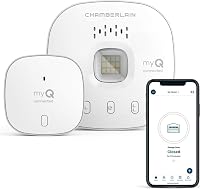
Our guide to adding Wi-Fi to an opener explains the add-on route. The guide to myQ and Alexa compatibility addresses one common platform question.
When is battery backup useful?
Battery backup matters when you want powered access during a power failure. It deserves extra weight if household members may struggle to lift a door manually or the garage is a main entry point.
Backup capacity is finite, so do not assume normal use can continue indefinitely. Follow the manual for supported functions, battery checks and replacement guidance.
Phone access and powered door movement are separate concerns. The opener may have battery power while the router or internet connection is unavailable.
A manual release also serves a different role from backup power. Learn its instructions before an outage, with the door closed and operating normally.
Do not disengage an open door with suspected spring or balance trouble. For a closer look at this choice, read whether you need garage door opener battery backup.
Does a built-in camera replace other access features?
A camera adds a view of the garage, while sensors, locks and access controls perform other jobs. Choose it if seeing activity would help you decide what to do, such as checking who entered.
Think about the view from the opener's final position. Shelves, hanging storage and the open door can affect what a fixed camera can see.
Discuss camera access with the household before enabling shared viewing. Also confirm whether the functions you want involve separate equipment or service terms, rather than assuming all camera functions are included.
How do you match an opener to your garage?
Match the opener to the moving door and its surrounding space, including the route of the rail or the wall unit's mounting position. Take measurements before choosing a model or planning installation.
Record the door's height and width, then identify whether it is sectional or one-piece. Have a technician confirm weight and spring details if you cannot guarantee them safely.
For an overhead model, check the path from the door header to the motor position. Beams, ducts, lights and storage can block the rail or leave no suitable mounting point.
For a wall mount, check the area beside the torsion tube and the required shaft arrangement. Limited headroom does not automatically mean a wall model will fit.
Keep the entire door path clear, including the area occupied when it is fully open. Account for vehicle roof racks and planned storage without reducing the clearances required by the manufacturer.
Locate a suitable outlet as part of the plan. Do not assume an existing ceiling outlet will serve a side-mounted opener or use an extension cord as a permanent substitute for proper power.
If your door is unusual, use our guide to garage door openers for tall, heavy or low-headroom doors. For a mounting comparison, read wall-mount vs. belt-drive openers.
Which garage door opener fits each priority?
Choose the model that solves your main access or space problem after it passes the door-fit checks. These four examples serve different buyers, so the most feature-rich option is not automatically the right one.
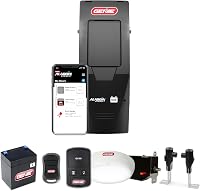
Genie StealthDrive Connect 7155 belt drive opener
The Genie StealthDrive Connect suits an attached garage whose household wants shared smart access. Its steel-reinforced belt and 1.25 HPc DC motor make it a belt-drive option, with integrated battery backup for outage operation.
It supports sectional residential doors up to 7 ft high and 500 lb. An 8 ft door requires a separately sold extension kit, so include that in the installation plan before ordering.
The included controls cover several ways to enter: two pre-programmed 2-button remotes, a wireless keypad and a multi-function wall console. The package also includes the Safe-T-Beam system.
Aladdin Connect supports individual virtual keys and activity alerts. Those features suit a household that wants to give people separate access rather than pass around one remote or shared account.
The wall console includes light control and a vacation lock. Genie also supports installation through the BILT app's interactive 3D instructions, which can help you follow the assembly sequence.
Choose this model if a keypad, multiple remotes and connected access all have a place in your routine. Its package is especially useful when drivers, walkers and temporary users enter in different ways.
Skip it if the door falls outside its approved fit or your main goal is to remove the ceiling rail. A buyer who needs only a wall button and one remote should also compare a simpler package.
Genie Chain Drive 500 model 1035
The Genie Chain Drive 500 suits basic daily entry without a camera or connected-access priority. It uses a 1/2 HP DC motor and a chain drive, with a pre-programmed 1-button remote and lighted wall push button.
The 5-piece rail snaps together without added hardware for those rail joints. That simplifies one assembly step, but the full opener still needs proper mounting, wiring, adjustment and safety checks.
HomeLink and Car2U support does not require repeaters or hubs for this opener. Confirm your vehicle's programming procedure before relying on its built-in controls as the main way to enter.
The included Safe-T-Beam system uses an infrared beam across the opening. Correct alignment and ongoing checks remain necessary even though Genie describes the motor as maintenance-free.
Choose this model when one remote and a wall control cover your needs and the overhead rail fits. It is a direct choice for someone who wants door access without making an app part of the routine.
Skip it if built-in phone control, a camera or included battery backup is a firm requirement. Also plan for additional compatible controls if several drivers each need a separate remote.
Do not choose it solely because chain drive sounds more durable. Door fit, correct installation and care matter more than assuming one drive material guarantees a longer service life.
Chamberlain 3/4 HP belt drive opener with fixed camera
The Chamberlain B4310 suits buyers who want door control and a garage view in one app. It combines a reinforced belt, DC motor and myQ access with a fixed camera offering a 130° wide-angle view.
The camera provides real-time viewing through myQ. It is useful when a door-status message alone would not answer your question about activity inside the garage.
Chamberlain describes the 3/4 HP motor as designed for frequent use. Confirm your door's approved fit separately, since that description is not a substitute for size and weight guidance.
Battery backup, two 1-button remotes and a multi-function wall control are included. The lighting uses two LED bulbs for front and rear coverage, and the bulbs are sold separately.
Plan accessory replacement before removing an older opener. Chamberlain says most older accessories are not compatible, so keeping existing remotes or keypads should not be part of the plan without confirmation.
Choose the B4310 if you expect to use the camera and want a belt model near living spaces. Check the planned camera view before deciding that an integrated unit meets your monitoring needs.
Skip it if you only need basic entry or want to retain older controls without checking compatibility. A fixed view is also a poor reason to choose this model if storage will block the area you want to see.
Genie B6172H wall mount opener
The Genie B6172H suits buyers who need usable ceiling space and have a compatible torsion setup. It mounts beside the door's torsion tube, with Aladdin Connect Wi-Fi and integrated battery backup.
Its supported residential door limits include 14 ft in height, 850 lb in weight and 180 sq ft in area. All applicable limits matter, so do not approve a door based on weight alone.
Genie supports compatible standard, high-lift and vertical-lift doors. The exclusions include reverse-wound springs, extension springs, one-piece doors and low-headroom outside hook-up arrangements.
A standard outlet must be within 6 ft of the opener. Check that location along with the required mounting space before treating this as a direct replacement for an overhead model.
The included accessories are a 3-button remote, wireless wall console, wireless LED light and automatic door lock. Safe-T-Pulse monitors cable slack electronically as part of the door's operation.
Choose this model when clearing the center ceiling solves a real layout problem. Have the installer confirm compatibility before building a storage or workshop plan around it.
Skip it if your spring or door arrangement is excluded, or you cannot provide the required space and power. See our best wall-mount garage door openers guide if this mounting style fits your garage.
What should you check before installation?
Confirm door condition, mounting, power and safe access before removing an old opener. Keep the new model's instructions available throughout installation, even when its parts look similar to the old system.
- Record the exact door type, dimensions and relevant weight or area limits.
- Confirm the spring system and any required rail extension or mounting parts.
- Inspect the planned rail or wall-unit position for obstructions.
- Check the outlet location and included controls.
- Identify how you will enter if the door cannot move during the work.
- Arrange qualified help for door, spring, cable or electrical work beyond your skills.
Springs and cables carry substantial force, so leave their adjustment to a qualified garage-door technician. Do not loosen them to make an opener fit.
Do not assume an old rail, wall control or safety sensor can stay. Reuse parts only when the new opener's manufacturer approves the exact combination.
After installation, follow the required travel, force, sensor and reversal procedures. Confirm that the door reaches its proper open and closed positions without pushing against an obstruction or straining at the end of travel.
Install the wall control where the instructions require it, with a view of the door and out of children's reach. Keep remotes away from children and explain that a moving door is never a place to run through.
How should you set up controls and shared access?
Set up physical entry first, then connected features. Make sure the wall control and remotes operate correctly before adding app accounts, voice connections or temporary users.
Program each intended control and remove access associated with an old system where applicable. For an existing opener with unknown remote access, follow its instructions for clearing stored controls and enrolling the ones you use.
Choose keypad codes that are not easy to guess. Avoid sharing a permanent household code for short-term access when a supported temporary or individual option would meet the need.
Use a unique account password for connected access and enable stronger account protection when available. Review who can open the door, view camera activity or receive alerts.
Keep a working entry method that does not depend on your phone. A dead phone battery, app problem or network outage should not leave the household without a practical access plan.
What care does a garage door opener need?
Care for the door and opener as one system, following both sets of instructions. A motor described as maintenance-free does not remove the need to inspect moving hardware and safety devices.
Look for frayed cables, damaged rollers, loose supports and changes in door movement. Stop using the system and arrange service if the door moves unevenly, drops or develops a new grinding sound.
Keep sensor lenses clean and the beam path clear. If the door refuses to close, check for objects and alignment problems rather than bypassing the sensors.
Lubricate only the parts and intervals named in the instructions. Do not coat the belt, chain, tracks or electronic parts simply because another door system uses lubricant there.
Perform the required reversal and sensor checks on the manufacturer's schedule. If the door fails a required check, keep it out of normal use until the problem is corrected.
Watch battery indicators and replace remote or backup batteries as directed. Keep the manual and model number accessible so the correct replacement parts and procedures are easy to find.
Which garage door opener mistakes should you avoid?
Avoid buying before checking fit and using motor power to compensate for a faulty door. These mistakes can turn a straightforward replacement into an unsuitable installation.
| Common mistake | Better approach |
|---|---|
| Choosing by horsepower alone | Confirm all approved door limits |
| Assuming any wall mount fits | Identify the spring and shaft arrangement first |
| Expecting a belt to silence worn hardware | Service the door as well as choosing the drive |
| Confusing Wi-Fi with backup power | Check outage operation separately |
| Reusing old accessories by default | Confirm exact compatibility |
| Raising force to overcome resistance | Find and repair the mechanical cause |
| Planning storage around a closed door | Allow for the full open position and travel |
| Buying a camera without considering its view | Check mounting position and obstructions |
Do not replace a working opener solely to gain app access without checking compatible add-ons. Conversely, adding connectivity is poor value if the existing opener already needs mechanical repair.
Treat installation needs as part of the choice. A required extension, new outlet or incompatible keypad can change which package makes the most sense even when both openers fit the door.
How do you choose the right garage door opener?
Choose the garage door opener that meets your hardest requirement first, then compare convenience features. That requirement may be quiet entry, basic controls, a camera or ceiling clearance.
- Choose the Genie StealthDrive Connect for a belt-drive package with shared app access, a keypad and multiple remotes.
- Choose the Genie Chain Drive 500 for basic overhead operation when its included remote and wall button cover your routine.
- Choose the Chamberlain B4310 when viewing garage activity through the same app as door control is a priority.
- Choose the Genie B6172H when ceiling space matters and a technician confirms the door and spring setup are compatible.
Before ordering, write down the door's fit requirements, the needed accessories and any installation changes. Reject any option that fails a required fit check, even if its other features appeal to you.
If more than one option remains, use our best garage door openers guide to compare the shortlist around the features you will use each day.
Frequently asked questions
Which type of garage door opener is quietest?
Start with a belt-drive opener when reducing noise near bedrooms matters. The two belt models here use DC motors, and both brands describe them as quiet.
Door rollers, hinges, balance and mounting also affect sound, so fix worn or loose door hardware before expecting a new opener to quiet the garage.
What horsepower garage door opener do I need?
Choose by the manufacturer's approved door dimensions, weight and use before comparing horsepower. HP and HPc labels are not interchangeable measures of lifting ability.
A larger motor cannot correct poor balance or binding, so have a qualified technician assess a heavy or hard-to-move door before selecting an opener.
Can I add Wi-Fi to an existing garage door opener?
You can add Wi-Fi to some existing openers with a compatible controller. Confirm support for your exact model, its safety sensors and the functions you want before buying.
An add-on can suit a sound opener, but it will not repair worn drive parts or supply battery backup by itself.
Is a wall-mount garage door opener right for every garage?
No, a wall-mount opener needs a compatible door, spring system and installation space. The Genie B6172H excludes reverse-wound springs, extension springs, one-piece doors and low-headroom outside hook-up arrangements.
Have the door setup checked before buying, and confirm side clearance and outlet position using the model's installation instructions.
Do smart garage door openers work during a power outage?
Powered door movement during an outage requires battery backup; Wi-Fi does not provide power. Three models here include backup, but available functions depend on the opener's instructions and battery condition.
Remote app access also needs a working network connection, which may fail if your router loses power.