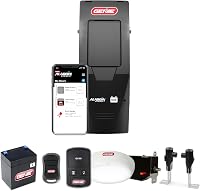
What Is a Jackshaft Garage Door Opener?
A jackshaft garage door opener mounts on the wall beside the garage door and turns the torsion bar to raise or lower it. It replaces the overhead opener rail and ceiling-mounted motor, but it needs a compatible door and spring setup.
On this page (7 sections)
- What is a jackshaft garage door opener?
- How does a wall-mount jackshaft opener work?
- Why choose a jackshaft opener?
- What should you check before choosing one?
- Which jackshaft garage door openers are worth comparing?
- How does a jackshaft opener compare with a belt drive?
- Is a jackshaft garage door opener right for your garage?
A jackshaft garage door opener mounts on the wall beside the garage door and turns the torsion bar to raise or lower it. It replaces the overhead opener rail and ceiling-mounted motor, freeing ceiling space, but the door must have a compatible spring setup.
You may also see this design called a wall-mount opener. It can suit a garage where overhead storage, a high ceiling, or less vibration through the ceiling matters.
What is a jackshaft garage door opener?
A jackshaft garage door opener is a wall-mounted motor that turns the garage door's torsion bar. The bar rotates to move the door, so the opener doesn't need a long rail running across the ceiling.
A traditional trolley opener hangs from the ceiling and moves a trolley along an overhead opener rail. A jackshaft unit sits beside the door, usually near the end of the torsion bar.
That location can leave more room above a parked car or for ceiling storage. It also changes where the motor's sound and vibration travel, though the door itself can still make noise.
How does a wall-mount jackshaft opener work?
A jackshaft opener works by turning the shaft connected to the torsion spring system. The spring helps balance the door, while the opener supplies the movement to open and close it.
The opener connects to the torsion bar at the side of the door. Controls such as a wall console or remote tell it when to move, and some models add app control or battery backup.
Because the opener depends on the shaft and spring arrangement, installation is not just a matter of moving a ceiling motor to the wall. Read the model's compatibility requirements and have a garage door professional check the system if you're unsure.
What does a jackshaft opener need from the door?
A jackshaft opener typically needs a sectional garage door with a compatible torsion spring and shaft. Requirements vary by model, so confirm the spring position, track arrangement, and clearance before buying.
Some models exclude extension springs, one-piece doors, roll-up doors, or particular low-headroom setups. For example, the Genie B6172H excludes reverse-wound springs, low-headroom outside hookups, extension springs, and one-piece doors.
Why choose a jackshaft opener?
Choose a jackshaft opener if you want to free ceiling space and your door supports a wall-mounted unit. Its main difference is placement: the motor mounts beside the door rather than above the car on an overhead rail.
This setup may also reduce sound and vibration passing through the ceiling. LiftMaster describes its 98022 as reducing sound and vibrations through the ceiling, but the door and its hardware still affect the noise you hear.
A wall-mount unit can be useful when overhead storage is important or the ceiling layout makes a standard rail inconvenient. Compare the layout with belt drive and chain drive openers before deciding.
Does a jackshaft opener save ceiling space?
Yes. It removes the opener rail and motor from the ceiling, leaving that area more open for storage or a cleaner garage layout.
The door's tracks remain in place, and stored items must stay clear of the moving door and its hardware. The motor also needs wall space beside the door.
Some models need a nearby outlet. Genie specifies a standard outlet within 6 ft of the B6172H and 6072H-B.
Is a jackshaft opener quieter?
A wall-mounted design can reduce noise and vibration transmitted through the ceiling because it doesn't use an overhead trolley rail. It won't make a loud, poorly balanced, or poorly maintained door quiet by itself.
Chamberlain describes its wall mount myQ opener as ultra-quiet and low-vibration. If quiet operation is your main goal, compare the whole door system and the belt drive versus chain drive differences.
What should you check before choosing one?
Before choosing a jackshaft opener, verify the door's spring type, track setup, size, weight, and clearance against the exact model's requirements. Also check the outlet location and whether you want app control or battery backup.
These checks matter because the opener connects directly to the door's shaft. For more help matching an opener to your door, see what size garage door opener you need and garage door openers for tall, heavy, or low-headroom doors.
How does door compatibility affect the choice?
Compatibility determines whether the opener can mount and operate as intended. Confirm the door has the spring and shaft arrangement the model requires, and check exclusions for your track and door style.
The LiftMaster 98022 requires a front-mount torsion bar system and excludes roll-up doors, low-headroom track, and Wayne Dalton TorqueMaster systems. If your setup doesn't meet the model's requirements, consider a compatible belt or chain drive opener.
Do smart features or battery backup matter?
They matter if you want to control the door from a phone or keep electronic operation during a power outage. Choose those features based on how you'll use the garage, since they don't change the door's mechanical compatibility.
The Genie B6172H includes Aladdin Connect and battery backup, while the Chamberlain wall mount myQ opener includes app control and battery backup. To compare backup options, read whether you need a battery backup.
Which jackshaft garage door openers are worth comparing?
These four wall-mount models show common differences in smart controls, battery backup, and door compatibility. Check each model's requirements against your door before choosing.
Genie B6172H wall mount opener
The Genie B6172H suits a reader who wants Aladdin Connect, battery backup, and support for compatible standard, high-lift, and vertical-lift doors. It supports doors up to 850 lb, 14 ft high, and 180 sq ft, subject to its installation requirements.
Genie says the Safe-T-Pulse system checks for slack in the door cables electronically. The model excludes reverse-wound springs, low-headroom outside hookups, extension springs, and one-piece doors.
LiftMaster 98022 Premium Series jackshaft opener
The LiftMaster 98022 may fit a garage where wall mounting and myQ connectivity are priorities. It requires a front-mount torsion bar system and excludes roll-up doors, low-headroom track, and Wayne Dalton TorqueMaster systems.
Check the spring and track setup carefully before choosing it. If you're comparing this model with a Chamberlain alternative, see LiftMaster 98022 versus Chamberlain wall mount.
Chamberlain wall mount myQ opener with battery backup
The Chamberlain wall mount myQ opener with battery backup may suit you if you want myQ app control, battery backup, and remote LED lighting. It also includes a motion-sensing wall control and a remote control.
Chamberlain describes this model as suitable for tall, heavy, custom, high-lift, or low-headroom setups. Confirm the exact door limits and track requirements in its installation manual before choosing it for one of those setups.
Genie 6072H-B wall mount opener with battery backup
The Genie 6072H-B is an option if you want a compact wall-mount unit with battery backup. It works with compatible residential sectional doors up to 850 lb and 14 ft high.
It includes a wireless wall console, a pre-programmed remote, and an automatic door lock. Genie also specifies an outlet within 6 ft, so check the location before planning installation.
How does a jackshaft opener compare with a belt drive?
A jackshaft opener mounts beside the door and turns its torsion bar; a belt drive opener hangs from the ceiling and moves a trolley along a rail. The main choice is wall-mounted space savings versus an overhead setup.
A belt drive may be an option if your door isn't compatible with a wall mount, provided it meets that opener's requirements. A jackshaft may suit you when ceiling space matters and your door has the required shaft and spring system.
Compare the layouts in wall mount versus belt drive openers and review how garage door openers work for the basic mechanism.
Is a jackshaft garage door opener right for your garage?
A jackshaft garage door opener is a good fit to consider when you want open ceiling space and have a compatible torsion-bar door. Check the exact model's spring, track, door size, weight, clearance, and outlet requirements before choosing one.
Pick a wall mount if ceiling space is the priority and your door meets the requirements. Pick a compatible belt or chain drive if its overhead setup better suits your installation; the best wall-mount garage door openers can help you compare wall-mounted options.
Frequently asked questions
What does a jackshaft garage door opener do?
A jackshaft opener mounts beside the garage door and turns the torsion bar, which raises or lowers the door. It replaces the overhead opener rail and ceiling-mounted motor found in a typical trolley opener.
The door needs a compatible torsion spring system, so check the opener's requirements before choosing one.
Does a jackshaft opener work with any garage door?
No. Jackshaft openers generally require a sectional door with a compatible torsion spring and shaft.
Some models exclude extension springs, one-piece doors, roll-up doors, or certain low-headroom track setups.
Confirm compatibility with your door and the exact opener's installation manual before buying.
Is a jackshaft opener quieter than a belt drive?
It can reduce noise and vibration through the ceiling because it mounts beside the door instead of pulling a trolley along an overhead rail. The door, opener, and installation all affect sound, so a wall mount isn't a guarantee of silent operation.
Compare it with a belt drive opener.
Does a jackshaft garage door opener need a torsion spring?
Yes, most residential jackshaft models connect to a torsion bar and spring system mounted above the door. They aren't a direct replacement for every opener setup, especially doors with extension springs.
Check the door's spring type and the exact model's compatibility requirements before buying.