Wall Mount vs Belt Drive Garage Door Openers: Which Is Better? (November 2026)
For a jackshaft vs belt drive garage door opener, choose jackshaft when your door is compatible and you need clear ceiling space. Choose belt drive when an overhead rail fits and your priority is a quiet opener for a standard door.
On this page (10 sections)
- Jackshaft vs belt drive garage door opener: what changes?
- Who should choose each drive type?
- Which door details can rule out a jackshaft?
- Which design makes more sense near bedrooms?
- How do backup power and smart controls affect the choice?
- Which of these 3 openers should you buy?
- What should you measure before ordering?
- What should happen during installation and setup?
- What care helps either type work properly?
- Which jackshaft vs belt drive garage door opener should you choose?
Choose a jackshaft opener for a compatible door when ceiling space matters, or a belt drive when an overhead rail fits your garage. The jackshaft vs belt drive garage door opener decision starts with door hardware and layout, then moves to noise, controls and backup power.
For a standard door beneath an open ceiling, a belt drive is a practical starting point. A wall mount becomes more useful when an opener rail would block planned storage, lighting or workshop space.
The garage door opener basics guide explains the wider range of drive types. Here, the goal is to choose between these 2 layouts and identify which of the 3 models fits your garage.
 Best for attached garages
Chamberlain 1/2 HP belt drive opener with battery backup

Jackshaft vs belt drive garage door opener: what changes?
A jackshaft turns the torsion shaft beside the door, while a belt drive pulls a trolley along an overhead rail. Both rely on a properly working door and spring system.
The springs counterbalance the door's weight. A stronger opener should not be used to drag a sticking door or compensate for a spring problem.
With a jackshaft, the motor mounts near one end of the shaft above the door opening. This removes the traditional opener rail and its ceiling-mounted motor from the central garage area.
With a belt drive, the motor sits farther back in the garage. The belt moves a trolley connected to the door by an arm.
How does jackshaft vs belt drive placement affect storage?
Wall mounting frees the rail's footprint, but it does not clear the entire ceiling. The door panels and tracks still need their full travel space, and storage must stay outside that moving area.
Plan around the open door, not just the closed one. A rack that clears the opener can still interfere with the top door panel or block access for service.
The jackshaft opener guide explains the mounting arrangement in more detail. Use it to understand the hardware before asking an installer about fit.
Who should choose each drive type?
Choose belt drive for a standard overhead installation and jackshaft when reclaiming ceiling space solves a real layout problem. Neither layout earns priority over compatibility.
A belt drive suits an attached garage where quiet operation matters and a rail can run behind the door without conflicts. It also makes sense when you have no useful plan for the ceiling area a wall mount would free.
Skip the belt layout if its motor or rail would obstruct necessary lighting, planned storage or another fixed feature. Measure the proposed installation before deciding that moving one shelf will solve the conflict.
A jackshaft suits a garage where overhead room has clear value, such as a workshop with carefully planned lighting or storage. It can also suit certain high lift arrangements, provided the exact model supports them.
Skip a jackshaft if your door hardware is incompatible or the wall beside the shaft cannot accommodate it. Choosing another opener is usually simpler than changing a working door system solely to obtain a preferred motor location.
For a tall, heavy or unusual door, start with the guide to garage doors with height, weight or headroom constraints. Those conditions can narrow your choices before noise or app features enter the decision.
Which door details can rule out a jackshaft?
Spring type, shaft arrangement and track geometry can rule out a wall mount opener. Door width and height are only part of the fit check.
The Genie B6172H supports compatible standard, high lift and vertical lift doors up to 14 ft high, 850 lb and 180 sq ft. Your door must meet every applicable limit, not just one.
It excludes reverse wound springs, extension springs, one-piece doors and low headroom outside hook-up arrangements. A door that looks similar to a neighbor's may still have different hardware.
The LiftMaster 98022 requires a front mount torsion bar system. It excludes roll up doors, low headroom track and Wayne Dalton TorqueMaster systems.
The Chamberlain B3000 is intended for standard garage doors. Its 1/2 HP motor is not a reason to assume it fits a heavy custom door or an unusual track arrangement.
Ask an installer to identify unclear hardware and confirm compatibility against the model manual. Do not loosen spring hardware or move cables to inspect the shaft.
Which design makes more sense near bedrooms?
Both layouts offer quiet-operation options, so choose by the specific model and the door's condition. There is no measured noise comparison here that establishes a universal winner.
Chamberlain describes the B3000's reinforced belt and DC motor as ultra-quiet and suitable near living spaces. LiftMaster says the 98022 reduces sound and vibration through the ceiling, while Genie describes the B6172H's DC motor as quiet.
An opener change will not remove every sound from the door. Worn rollers, loose hardware, rough travel and vibration can remain even after the drive mechanism changes.
Listen for where the noise begins: at the motor, along the tracks or as the panels bend through the curve. Give the installer that description so the door and opener can be assessed together.
The best quiet garage door openers guide helps narrow the model choice once the installation type is settled. Avoid choosing a wall mount solely because you expect silence upstairs.
How do backup power and smart controls affect the choice?
Choose backup power and app controls by model, not drive type. The Chamberlain B3000 and Genie B6172H include battery backup, and all 3 openers offer smart controls.
Chamberlain includes myQ access, a one-button remote and a one-button wall control. Most older accessories are incompatible, so count the controls you need for each driver before replacing an existing unit.
Chamberlain also states HomeLink compatibility with most vehicles made after 2016. Check your vehicle's compatibility rather than assuming every built-in garage button will work.
Genie's Aladdin Connect supports remote monitoring and operation, with compatibility that includes Alexa, Google Assistant and SmartThings. Check the exact action you want to perform, since app access and voice control are different needs.
The LiftMaster includes myQ and Security 2.0. If backup operation is essential, have the installer confirm the complete package and power requirements before choosing it.
Check Wi-Fi reception near the planned motor location. A phone that connects well inside the house does not prove the signal is strong beside the garage door.
Our battery backup guide explains when outage access should influence the choice. Keep a working local control available, because remote access also depends on your network.
Which of these 3 openers should you buy?
The Chamberlain is the starting choice for a standard-door belt setup; the Genie suits compatible wall mounting with backup included. The LiftMaster suits buyers who want myQ in a compatible wall mount installation.
Chamberlain B3000: for a standard door near living space
Choose the Chamberlain when you want everyday access without changing to a wall mount layout. Its controls cover basic use, and Chamberlain backs the motor and belt with a 5-year warranty.
Allow for a separately sold light bulb and any replacement accessories you need. Skip this model if your door needs a capacity or configuration that has not been confirmed for it.
If the belt layout fits but your control or lighting needs differ, compare the best belt drive garage door openers.
Genie B6172H: for useful overhead room
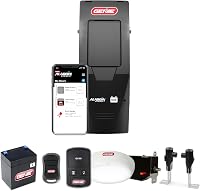
Choose the Genie when you have a clear use for the freed ceiling area and its supported door arrangements match yours. The included wireless wall console, wireless LED light and automatic door lock help complete the installation.
Its Safe-T-Pulse system monitors cable slack electronically. That feature does not remove the need to keep the door, springs and cables in proper condition.
Skip it if the spring arrangement fails the compatibility check. A generous door capacity does not override an excluded spring or track setup.
LiftMaster 98022: for wall mounting with myQ
Choose the LiftMaster when you want its wall mount layout and myQ controls, and the installer confirms the required hardware. Its ceiling-vibration claim is relevant when the motor location matters to nearby rooms.
Skip it if your track or spring system falls within its exclusions. Also settle any essential backup-power requirement before ordering, rather than assuming wall mount models share the same included equipment.
What should you measure before ordering?
Record door dimensions, mounting clearances, obstructions and outlet locations before selecting a model. Use the installation manual for required clearances rather than judging fit from the opener's body dimensions.
A useful pre-order checklist is:
- Door width and height, plus confirmed weight when capacity is a concern.
- Spring type, shaft arrangement and track style.
- Available space beside the shaft for a wall mount.
- The full overhead rail and motor path for a belt drive.
- Ceiling structure and suitable attachment points.
- Outlets, lights and storage that affect placement.
- Access to controls and the manual release.
The Genie requires a standard outlet within 6 ft of the opener. For any model, plan a suitable power connection instead of relying on a temporary cord.
Photograph the door from inside with it closed, including the spring area, both track curves and nearby walls. These views can help an installer spot questions, though they do not replace an on-site assessment.
The garage door opener size guide explains how dimensions affect selection. Do not estimate a heavy door's weight from its width alone.
What should happen during installation and setup?
Start with a sound, balanced door, then install and adjust the opener according to its manual. Mounting the motor is only part of the work.
Have a professional address broken springs, damaged cables or a door that binds before the opener goes in. Do not increase operating force to make the motor overcome those faults.
For belt drive replacement, do not assume the old rail, trolley or brackets can be reused. Confirm approved parts and mounting requirements for the new model.
For wall mounting, plan the opener, any required lock, lighting and controls together. Clearing the central ceiling can change where you need illumination.
Before the installer leaves, have them demonstrate the safety reversal features, photo-eye response, local controls and manual release. Ask how to operate the door during an outage and where to find the maintenance instructions.
Only use the manual release as directed, preferably with the door fully closed. A poorly balanced door can move suddenly when disconnected from the opener.
What care helps either type work properly?
Keep the door moving freely and follow the opener's maintenance schedule. Wall mounting removes the overhead belt and rail, but it does not remove hinges, rollers, tracks, springs or cables from the door system.
Keep sensor lenses clean and their path clear. Boxes, tools and storage near the floor can block the beam even when nothing touches the door.
Lubricate only the parts and with the products recommended in the manuals. Do not grease a belt or coat tracks simply because the door has become noisy.
Inspect visible hardware for damage without loosening spring or cable attachments. Arrange service if the door develops uneven travel, scraping, slack cables or a sudden change in sound.
Follow the manual's schedule for safety reversal checks and battery care. Avoid using repeated close commands or higher force settings to work around a door that reverses unexpectedly.
Which jackshaft vs belt drive garage door opener should you choose?
Choose a belt drive when a standard overhead installation meets your needs. Choose a jackshaft when confirmed compatibility lets you reclaim ceiling space you will actually use.
The Chamberlain B3000 fits the standard-door buyer who wants quiet-operation features and included backup. The Genie B6172H is the wall mount choice here when its supported door setup and included equipment match your needs.
Choose the LiftMaster 98022 when its required shaft arrangement fits and you want wall mounting with myQ. Keep it off the shortlist until any essential backup requirement is resolved.
For your jackshaft vs belt drive garage door opener decision, get the fit confirmed before comparing convenience features. If wall mounting passes that check, use the best wall mount garage door openers guide to narrow your final choice.
Frequently asked questions
Is a wall mount garage door opener quieter than a belt drive?
Neither design is always quieter. A wall mount removes the overhead motor and rail, while a belt drive can provide quiet operation near living spaces.
Door rollers, hinges, balance and mounting also affect noise, so have a noisy door checked before expecting a new opener to solve the problem.
Can a jackshaft opener work with any garage door?
No, a jackshaft needs a compatible shaft, spring and track arrangement, plus room beside the door. A door's size alone does not guarantee fit.
Identify its spring system and track style, then have the installer check those details against the exact opener manual before you order.
Does a belt drive opener need ceiling space?
Yes, a belt drive needs space for an overhead rail and motor, along with secure mounting points. Check the full route behind the door, including lights and storage racks.
Replacing an existing overhead opener does not mean its old rail or brackets can automatically stay in place.
Which type works during a power outage?
Either type can operate during an outage if the chosen model has battery backup. The Chamberlain B3000 and Genie B6172H include it.
Follow the manual for battery care and operating limits, and remember that the opener's battery does not keep your home router or internet connection running.
Should I choose a jackshaft or belt drive for a heavy door?
Choose by the door's confirmed weight, dimensions, balance and hardware compatibility before choosing a drive type. A jackshaft is not automatically suitable for every heavy door, and horsepower alone cannot guarantee fit.
Have a garage door professional check the door and confirm a specific model's limits.