What Size Garage Door Opener Do I Need?
To choose what size garage door opener you need, match its door limits to your door's dimensions, weight, and daily use. A 1/2 HP model can suit a standard, balanced door; confirm compatibility before choosing more power.
On this page (6 sections)
The garage door opener size you need depends on door weight, dimensions, balance, and daily use. A 1/2 HP model can suit a standard, well-balanced residential door when that door falls within the opener's approved limits.
Choose the door fit first, then decide whether frequent use, quieter operation, or camera access makes another model worthwhile. Buying a larger motor won't fix worn springs, a binding track, or the wrong rail length.
What size garage door opener do you need?
Start with your door's specifications, then choose an opener approved to move it. Horsepower helps narrow the options, but it isn't a universal door-weight chart.
Garage door springs counterbalance the door's weight. The opener moves that balanced door along its track, so the motor shouldn't have to drag a poorly working door open.
Before comparing models, gather these details:
- Width and height: Measure the door opening, not just a section of the door.
- Door construction: Note whether it is steel, wood, insulated, or another material.
- Weight: Use the door maker's information or an installer's assessment.
- Daily use: Count opening and closing cycles for the whole household.
- Mounting space: Check overhead clearance, rail space, and nearby obstructions.
Don't estimate door weight from its appearance. Two doors of the same width can place different demands on an opener because their construction differs.
For the basics behind these choices, read garage door openers explained. Our guide to choosing a garage door opener covers the wider feature and installation decisions.
How do you choose a garage door opener size for a single door?
A 1/2 HP model is a sensible starting point for a standard single door used for everyday household access. Confirm the specific door limits before treating that as your final choice.
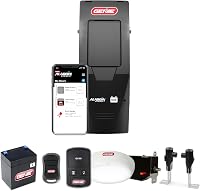
The Chamberlain B3000 suits a buyer who wants simple controls, phone access through myQ, and a belt drive near living space. It includes a 1-button remote and a basic wall control, so it fits a household that doesn't need several control options in the box.
Skip this model if your door falls outside its approved limits or you specifically want an integrated camera. Its everyday-use role also gives a busy household a reason to compare the frequent-use models below.
Allow for a separately purchased light bulb. If you plan to use existing remotes or a keypad, check compatibility before keeping them as part of your replacement setup.
What size opener suits a double garage door?
Choose a double-door opener by weight, height, and approved door area, rather than width alone. A wide, lightweight door and a solid wood door can need different equipment.
Don't automatically rule out a lower-power model or assume a higher-power model fits. Match the door's actual specifications to the manufacturer's requirements, then consider how often the garage runs each day.
If you can't identify the door, an installer can help establish its construction and suitable opener options.
How do door weight and balance affect opener size?
Correct balance comes before motor size. A door that binds, sits crooked, or suddenly becomes hard to move needs attention before you buy an opener.
Springs and cables operate under tension, so leave their adjustment and repair to a qualified garage door technician. Don't pull the emergency release while the door is open or partly open if a spring or balance fault is possible.
Have the door checked if you notice uneven travel, damaged hardware, or a change in how it moves. Repeatedly trying the opener can put more strain on the system without solving the cause.
Insulation and added hardware can also change the door's weight. If the door has been altered since its last opener was installed, use its current specifications rather than copying the old motor rating.
For unusual dimensions or mounting restrictions, see garage door openers for tall, heavy, or low-headroom doors.
Does a heavier door always need more horsepower?
A heavier door needs confirmed capacity, not simply the largest number. Even a high-power opener must be compatible with the door type, rail, and installation.
Chamberlain positions the B6830 for frequent use and demanding conditions, including extreme weather. Its 1-1/4 HP label is a comparison with AC motor lift capacity; Chamberlain notes that DC motor lift capacity is typically not measured in horsepower.
This model suits a buyer who wants those features plus an adjustable camera and Corner-to-Corner Lighting. Chamberlain also backs its motor and belt with a 10-year warranty.
Skip it if everyday operation is your main need and you won't use the extra monitoring features. Its higher power label still doesn't guarantee suitability for every heavy or oversized door.
When is a 3/4 HP opener a better fit?
The Chamberlain B4310 is worth considering for a busy garage, especially when remote viewing is useful. Chamberlain designs this model for frequent use, making household traffic a stronger reason to consider it than door width alone.
A garage serving several drivers may run throughout the day for commuting, errands, and other access. Count that total use rather than judging demand by how often one person drives.
Its fixed camera provides a 130-degree view through myQ, and 2 included remotes suit a household with 2 drivers. A multifunction wall control also handles the door and lighting.
Choose it when those controls and video access solve a daily need. Skip it if you want to aim the camera yourself, or if basic access is enough and the B3000 meets your door requirements.
Check Wi-Fi coverage at the motor's planned location before relying on app access. A camera is useful only when its installed view covers the area you want to see.
Should you pick an opener by horsepower alone?
No, choose the drive and features around how you use the garage. Motor suitability remains essential, but extra power doesn't answer questions about noise, outage access, or mounting space.
All 3 models here use a reinforced belt drive and DC motor that Chamberlain describes as quiet options for garages near living spaces. Compare belt drive versus chain drive garage door openers if noise is part of your decision.
A wall-mount jackshaft opener may suit a garage where overhead equipment would interfere with usable space. Read how a jackshaft garage door opener works before choosing that layout, since it has its own door and mounting requirements.
All 3 Chamberlain options include battery backup. If the garage is your main entrance, our guide to whether you need garage door opener battery backup can help you plan for outages.
What should you check before installation and during use?
Confirm the rail, mounting space, controls, and safety setup before installation. A compatible motor can still be the wrong purchase if the complete assembly doesn't fit.
Check door height and rail reach
Measure the door height and compare it with the opener's standard installation range. A taller door may need an approved extension kit, so don't assume the rail in the box reaches far enough.
Check the full rail path for beams, lights, storage, and other obstructions. The motor housing's dimensions don't describe the space needed for the installed opener.
Plan the replacement controls
Don't assume old accessories will carry over. Chamberlain notes that most older accessories aren't compatible with the B3000 and B4310, so confirm any remotes or keypads you want to reuse.
Locate a suitable power outlet and follow the installation instructions for mounting, wiring, and control placement. Have an installer resolve uncertain structural support or electrical needs.
Set travel and safety functions correctly
Follow the manual to set opening and closing travel, align the safety sensors, and complete its reversal checks. Don't raise force settings to push past resistance or bypass a sensor to make the door close.
Keep the sensor path clear and repeat the manual's safety checks at its stated intervals. After setup, make sure everyone who uses the garage understands the wall control and emergency release.
Care for the door as well as the opener
Follow the door and opener manuals for lubrication, inspection, and battery care. Keep the tracks free of debris, and don't add grease to them unless the door maker calls for it.
Arrange service if movement becomes uneven or the sound changes sharply. More motor force is the wrong response to a new mechanical problem.
Which garage door opener size should you choose?
To decide what size garage door opener you need, first rule out models that don't meet your door and installation requirements. Then choose the features that match your household.
- Choose the B3000 for a compatible standard door, everyday use, and simple controls.
- Choose the B4310 for frequent use when a fixed camera and 2 included remotes are useful.
- Choose the B6830 when Chamberlain's demanding-use positioning, adjustable camera, and longer motor-and-belt warranty match your priorities.
If your door is unusually heavy or tall, get its specifications confirmed before ordering. Then compare garage door openers for heavy doors with those requirements in hand.
Frequently asked questions
What size garage door opener do I need for a standard door?
A 1/2 HP opener can suit a standard, well-balanced residential door if its approved door limits cover your setup. Check width, height, weight, and door type before buying.
A taller door may need a compatible rail extension, while frequent use may favor a model designed for more cycles.
Is a 3/4 HP garage door opener stronger than a 1/2 HP opener?
A 3/4 HP label suggests a higher power class, but it doesn't guarantee a particular door capacity or prove compatibility. Chamberlain positions its 3/4 HP model here for frequent use.
Compare approved door limits and operating requirements rather than treating horsepower as a universal measure across motor designs.
Do I need a more powerful opener for a heavy garage door?
A heavy door needs an opener approved for its size and weight, plus springs that correctly balance it. More motor power won't repair a door that binds or feels unusually heavy.
Have a qualified garage door technician check uneven movement or balance problems before choosing a replacement opener.
Does a bigger garage door need a bigger opener?
A bigger door may need a different opener, a longer compatible rail, or another installation setup. Width alone doesn't settle the choice because construction and weight also matter.
Confirm the manufacturer's limits for height, area, weight, and door type, then check the available mounting space in your garage.