How Does a Garage Door Opener Work?
A garage door opener works by using a motor to move a trolley or turn the door shaft, while springs balance much of the door's weight. Travel settings control where it stops, and safety systems help it respond to obstructions.
On this page (8 sections)
- How does a garage door opener work?
- What parts make the door move?
- How does a garage door opener know when to stop?
- What happens if you use the emergency release?
- Which drive type fits your garage?
- What should you check before choosing an opener?
- What setup and care keep an opener working properly?
- What should you remember about how a garage door opener works?
A garage door opener works by using a motor to move a trolley or turn the door shaft, while springs balance much of the door's weight. A remote, wall button, or connected app sends the command to start.
The drive moves the door, travel settings define its stopping points, and safety systems help it respond to obstructions. Understanding those jobs makes it easier to choose an opener and spot problems that need door repair.
How does a garage door opener work?
A garage door opener turns an electrical command into controlled movement. On a common ceiling-mounted model, the motor drives a chain or belt that moves a trolley along a rail.
An arm connects that trolley to the door. As the trolley moves toward the motor, it pulls the door open along its tracks; moving back toward the opening pushes the door closed.
A wall-mount opener turns the door's torsion shaft instead. Cable drums on that shaft wind or unwind the lifting cables as the door moves.
For a broader comparison of these systems, see garage door opener drive types, horsepower, and Wi-Fi.
What parts make the door move?
The motor and drive provide motion, while the door's springs, cables, rollers, and tracks support balanced travel. Replacing an opener won't correct faults in those door parts.
What does a garage door opener's motor do?
The motor turns the drive mechanism in either direction to open or close the door. Its power rating matters, but door size, weight, construction, and balance determine whether an opener is suitable.
Don't buy a stronger motor to overcome a sticking or unusually heavy door. Have the door serviced before choosing its replacement opener.
How do the rail and trolley work?
The rail guides the trolley between the motor and the wall above the door. The connected door arm transfers that movement to the top section of the door.
Door height affects the rail length you need. Before ordering a ceiling-mounted opener, confirm its supported door height and whether your installation needs a compatible extension kit.
What do springs do?
Springs store energy and counterbalance the door so it can move with much less effort. The opener controls movement rather than carrying the full door weight without help.
A broken spring, damaged cable, or crooked door calls for professional service. Springs and related hardware hold high tension, so don't loosen them or attempt adjustments yourself.
What do the controls do?
A remote sends a radio command, while a wired wall button sends its command through the control wiring. The opener's control board manages the motor and reads inputs from its safety systems.
Phone control adds a network connection, not a different lifting method. Read how to add Wi-Fi to a garage door opener if your existing opener works well and remote access is your main goal.
How does a garage door opener know when to stop?
Travel limits set the normal stopping points, while obstruction sensing and photoelectric sensors help the opener respond to trouble. These systems have different jobs.
The open limit keeps the door from traveling too far upward. The close limit brings it to the floor without trying to push beyond that point.
Force sensing helps the opener detect resistance during movement. Never increase force just to make a binding door close; find the cause first.
Photoelectric sensors send an invisible beam across the lower opening. If something interrupts it during closing, the door should reverse.
Keep the beam path clear and the sensors aligned. Don't bypass them or assume they protect every part of the opening; people and pets should stay clear whenever the door moves.
What happens if you use the emergency release?
The emergency release disconnects the door from the drive, allowing manual movement. Use the procedure in your manual with the door fully closed and only when the door is in safe working order.
Releasing an open door can let it fall if the springs or balance are faulty. If the door is stuck open, crooked, or visibly damaged, keep people away and call a garage door professional.
Reconnection steps vary by opener. Don't force the trolley or door arm if the mechanism doesn't engage as described in the manual.
Which drive type fits your garage?
Choose a chain drive for straightforward powered access, a belt drive when drive noise matters, or a compatible wall-mount system to free ceiling space. Door fit comes before convenience features.
Both chain and belt systems use a ceiling rail. Our belt drive vs chain drive comparison explains the tradeoffs for attached and detached garages.
A wall-mount system needs suitable shaft clearance and door hardware. Read what a jackshaft garage door opener is before planning around that layout.
Who should choose the Genie Chain Drive 500?
The Genie Chain Drive 500 model 1035 suits buyers who want simple remote and wall-button access from a traditional chain system. Its 1/2 HP DC motor drives the trolley, and its Safe-T Beam system provides infrared obstruction detection.
The package includes a preprogrammed 1-button remote and a lighted wall control. HomeLink and Car2U compatibility without extra repeaters or hubs makes it useful for drivers who prefer built-in vehicle buttons.
Its 5-piece rail snaps together without added assembly hardware, but mounting, wiring, and door adjustments still need care. Skip it if freeing ceiling space or getting included battery backup drives your choice.
Who should choose the Chamberlain belt drive?
The Chamberlain 1/2 HP belt drive opener with battery backup suits attached garages near living spaces and households that need powered access during outages. Chamberlain describes its reinforced belt and DC motor as ultra-quiet.
The myQ app supports remote opening and closing, while the included remote and wall button handle everyday access. Plan for Wi-Fi coverage in the garage if phone control matters to you.
Skip this model if you expect to reuse a large collection of older accessories, since most aren't compatible. It supports HomeLink in most vehicles made after 2016, so check your vehicle before relying on its built-in buttons.
Who should choose the Genie B6172H wall mount?
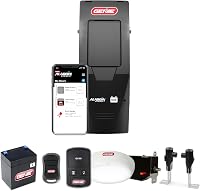
The Genie B6172H wall mount opener suits compatible garages where ceiling space matters, including some tall or high-lift door setups. It includes Aladdin Connect phone control, battery backup, a wireless light, and an automatic door lock.
It supports compatible residential doors up to 14 ft high, 850 lb, and 180 sq ft. Those limits all apply, so meeting the weight limit alone doesn't guarantee fit.
Skip it for extension springs, 1-piece doors, reverse-wound springs, or low-headroom outside hookups. Have the installer confirm shaft clearance and a standard outlet within 6 ft before buying.
What should you check before choosing an opener?
Confirm door compatibility and mounting space first, then choose the features that solve your daily access needs. Motor power alone isn't a reliable buying shortcut.
- Door fit: Record the door's height, width, type, and known weight, then check the opener's limits.
- Available space: Measure the ceiling rail area or the space beside the torsion shaft.
- Noise needs: Give belt drive more weight when bedrooms or living rooms adjoin the garage.
- Access needs: Decide who needs remotes, vehicle controls, phone access, or backup power.
Use what size garage door opener you need to match capacity to the door. Then follow how to choose a garage door opener to narrow the installation and control options.
Backup matters most when the garage is your usual entrance or outages make manual access difficult. Our guide to whether you need battery backup helps you weigh that need.
What setup and care keep an opener working properly?
Correct mounting, travel adjustment, and working safety devices matter more than adding features. Follow the specific manual, since procedures differ between models.
During setup, position controls where users can see the door and children can't reach them. Route wires clear of moving parts, pair the remotes, and set the travel limits before regular use.
Complete every safety check the manual requires, including its reversal procedure. If a check fails, stop automatic operation until the cause is fixed.
For routine care, keep sensor lenses clean and watch for loose mounting hardware or changes in door movement. Lubricate only the parts and locations the door and opener manuals specify.
Don't assume a maintenance-free motor means the whole door needs no care. Rollers, hinges, springs, and cables remain separate service items.
Check a backup battery as directed and replace it when required. Backup runs for a limited time, and it doesn't necessarily keep your home router or internet connection running.
What should you remember about how a garage door opener works?
Knowing how a garage door opener works gives you a clear decision rule: fix the door first, match the drive second, and choose access features last. New controls or extra motor power won't solve damaged door hardware.
Choose the Genie Chain Drive 500 for basic chain-drive access, the Chamberlain for a belt drive with outage support, or the Genie B6172H when compatible wall mounting solves a space problem.
Before committing to the wall-mount option, review what a jackshaft garage door opener is and have your door's fit confirmed.
Frequently asked questions
Does a garage door opener lift the door by itself?
The motor moves the door, but the springs counterbalance much of its weight. A door that binds or suddenly feels heavy needs service before you keep using the opener.
Leave spring adjustment and repair to a trained garage door professional because those parts hold high tension.
What do garage door safety sensors do?
Photoelectric sensors send an invisible beam across the lower door opening. Breaking that beam during closing should make the door reverse.
Keep both sensors aligned and clear, follow the safety checks in your manual, and stop automatic use if the door fails to respond correctly.
What is the difference between a belt drive and a chain drive?
Both move a trolley along a ceiling rail, but one uses a reinforced belt and the other uses a metal chain. Belt drives generally suit garages near bedrooms because they reduce drive noise.
Door condition and mounting quality also affect sound, so changing the drive won't cure worn rollers.
Can a garage door opener work during a power outage?
An opener with battery backup can run during an outage while its battery has charge. Without backup, manual access generally requires the emergency release.
Follow the manual with the door fully closed, and don't disconnect or move a door with suspected spring damage or balance problems.